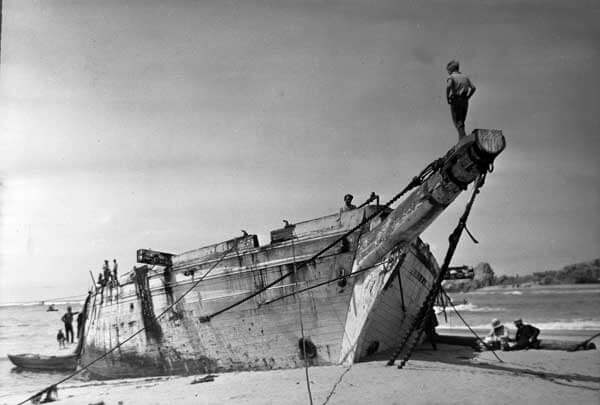
The Wreck of the Muriel
In the 1920s, silent movie production companies often used Newport Beach and the surrounding coastline as backdrops. Unlike the bustling port of Los Angeles, Newport Bay and Catalina had few… Read More »

In the 1920s, silent movie production companies often used Newport Beach and the surrounding coastline as backdrops. Unlike the bustling port of Los Angeles, Newport Bay and Catalina had few… Read More »
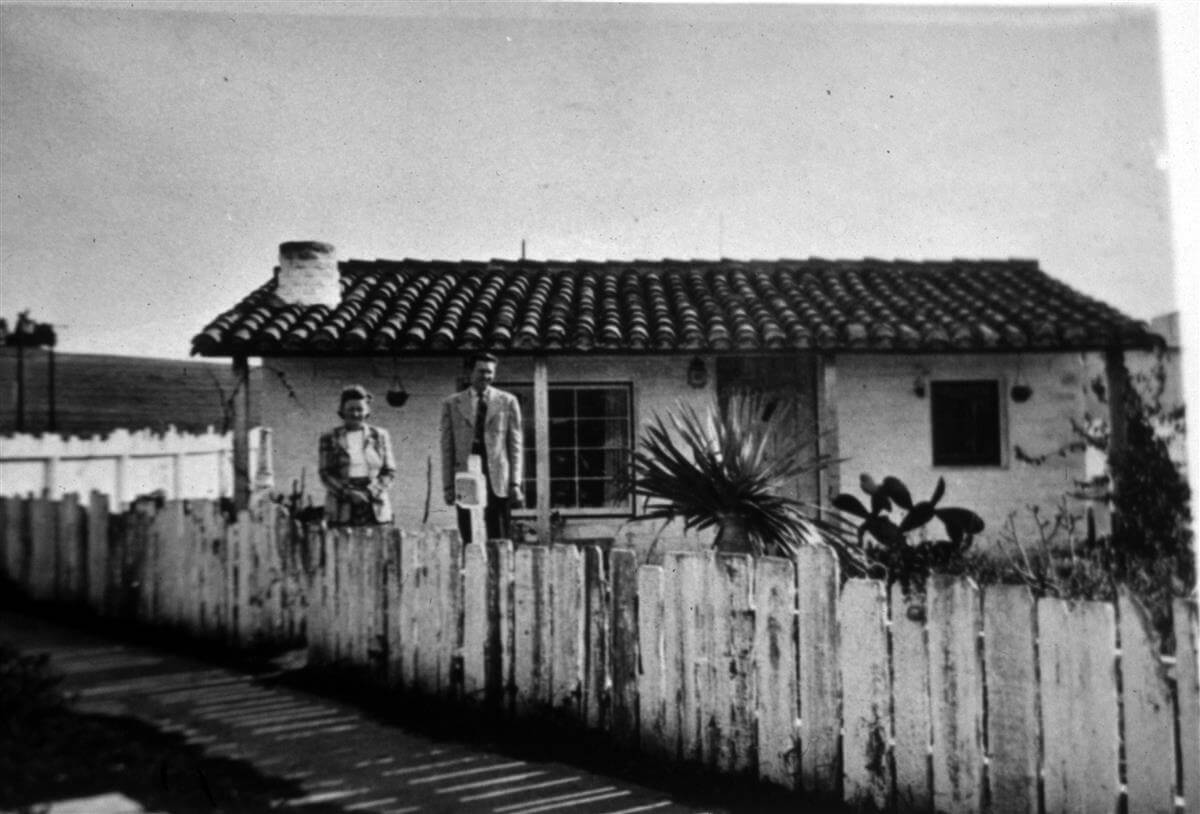
The oldest structure at Sherman Library & Gardens is a single-room adobe house built by Lawrence and Pauline Lushbaugh in the late 1930s. The Lushbaugh’s story is interesting: the young couple bought a plot of land, and taught themselves how to make fired-adobe brinks to build their own home. Yet if a single element of the story fascinates people, it is this: the Lushbaughs bought the land for their house from the City of Newport Beach for $600.00, an amount that would not cover the cost of a square foot of a typical house today.
For the last 50 years, Sherman Library has been collecting valuable historical materials about the history of the Pacific Southwest. One of the strengths of the collection is the history of Newport Beach. For the first time, information about these collections is now available in a Guide to Newport Beach Historical Collections in Sherman Library.
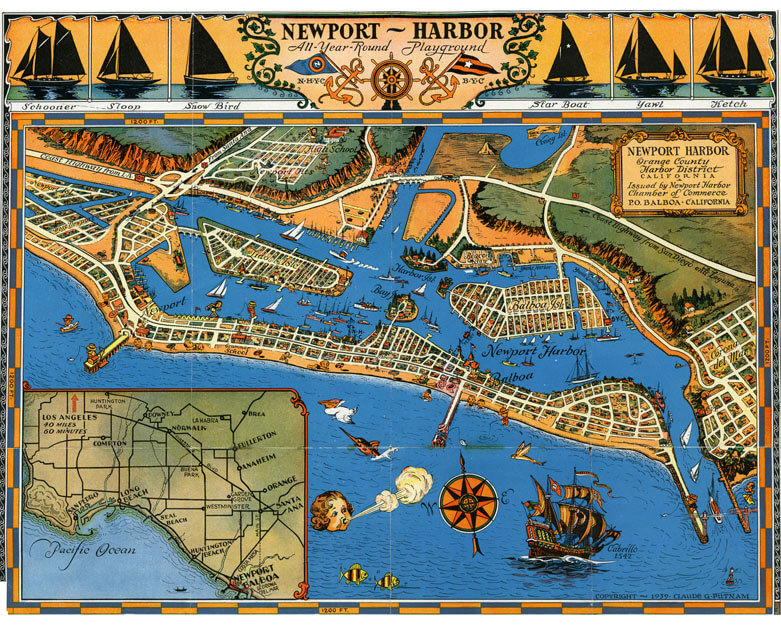
Every day countless people drive on Jamboree Road in Newport Beach without knowing the origin of the street’s name. Today it is hard to image that 45,000 Boy Scouts once camped on the spot now occupied by Fashion Island. But, in 1953, when Irvine Ranch hosted the Third National Jamboree, that was the case.
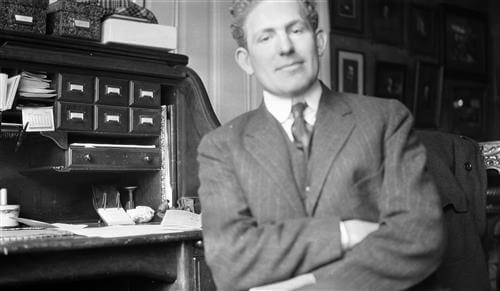
Sherman Library & Gardens’ origins can be traced to one day in April 1914. On that day, Moses Hazeltine Sherman approached Arnold Haskell, a young man working as a clerk at the reception desk of the Mission Inn in Riverside, with a job offer. Years later Haskell recalled, “The General [Sherman] came in and he said, ‘Arnold, do you want to work for me?’ I said, ‘Yes, I do.’ He said, ‘Well, the train leaves for Los Angeles at four o’clock this afternoon.’ Years later, Arnold Haskell would honor the man who hired him by naming Sherman Library & Gardens after him.
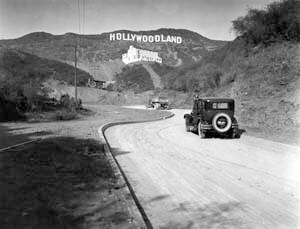
What does the Hollywood sign have to do with Sherman Library & Gardens? Quite a lot, as it turns out. The Hollywood sign started out as the Hollywoodland sign, an advertising gimmick designed to attract buyers to a new luxury housing subdivision: Hollywoodland. Dubbed “the supreme achievement in community building,†the subdivision land was owned by Moses H. Sherman, namesake of Sherman Library & Gardens. In 1922, Sherman put together the Hollywoodland syndicate (as business partnerships were often called then) which included his business partner and brother-in-law Eli P. Clark, Los Angeles Times publisher Harry Chandler, and developers Tracy Shoults and Sydney H. Woodruff. The Hollywoodland sign cost the syndicate $23,501.32.